
Does Amul’s World’s Largest Curd Plant in West Bengal Hide 49 Minutes of Suffering in Every Tub?
Disclaimer
This article is an opinion-based commentary on industrial dairy practices, based on publicly available information and general industry research. References to specific projects, locations, or companies are contextual and not intended as definitive claims about any particular entity. Descriptions of animal treatment reflect documented practices in parts of the industry and may not apply universally. The content is presented in good faith for public discussion and is not intended to defame or misrepresent any individual, organization or government body. Readers are encouraged to verify information independently and consider multiple perspectives.

The earthen pot of mishti doi sits cool against the palm, the condensation gathering on the terracotta.
In Sankrail, a massive food park is set to absorb an investment of between 600 crore and 650 crore rupees to make sure this pot never runs empty. The state authorities and billboards call it a monumental triumph of the second White Revolution. The proposed plant is designed to drink up 1.5 million litres of milk every single day, churning out a million kilograms of curd, lassi and buttermilk. It sounds like a miracle of modern agrarian economics, a neat, sanitized narrative of integrating over 1.2 lakh women milk producers across the districts of Bengal.
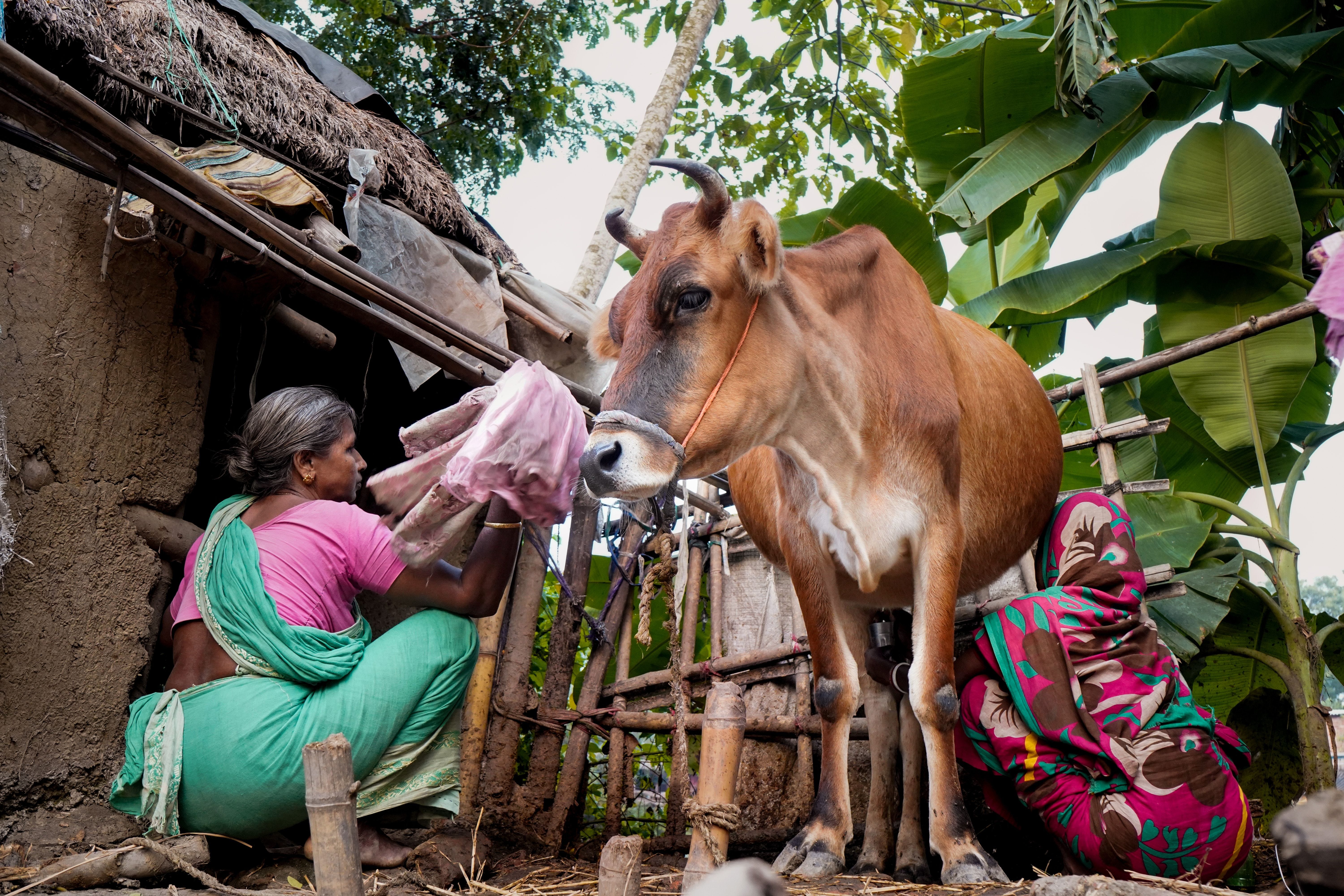
But milk is not water drawn from a municipal borewell. It is a biological fluid. To feed that single mega-facility daily, a standing population of half a million adult cows is permanently tethered to the machinery. The packaging shows green pastures and wide skies but the reality is a wet concrete floor. In this region, cows are routinely tied on ropes less than a meter long, standing in their own waste, their weight shifting constantly to ease the pain of swollen joints and hoof ulcers.
The foundation of this entire economy rests on a simple, brutal biology. A cow produces milk only because she has recently given birth. In the cooperative system, the newborn calf is a thief. If the calf drinks, the factory loses its volume. So the separation happens almost immediately. The severance of this maternal bond induces a psychological agony that is absolute and disabling. The mother cow paces her enclosure and bellows for days. In Bengal, when smallholder farmers cannot easily dispose of the calf, they sometimes employ a horrific jugaad. They take the skin of the dead calf and stuff it with hay. They call it a Khal bacha. The mother is presented with this dry husk to stimulate the hormone release needed for milk let-down. She licks the stitched hide while the milking machine hums.
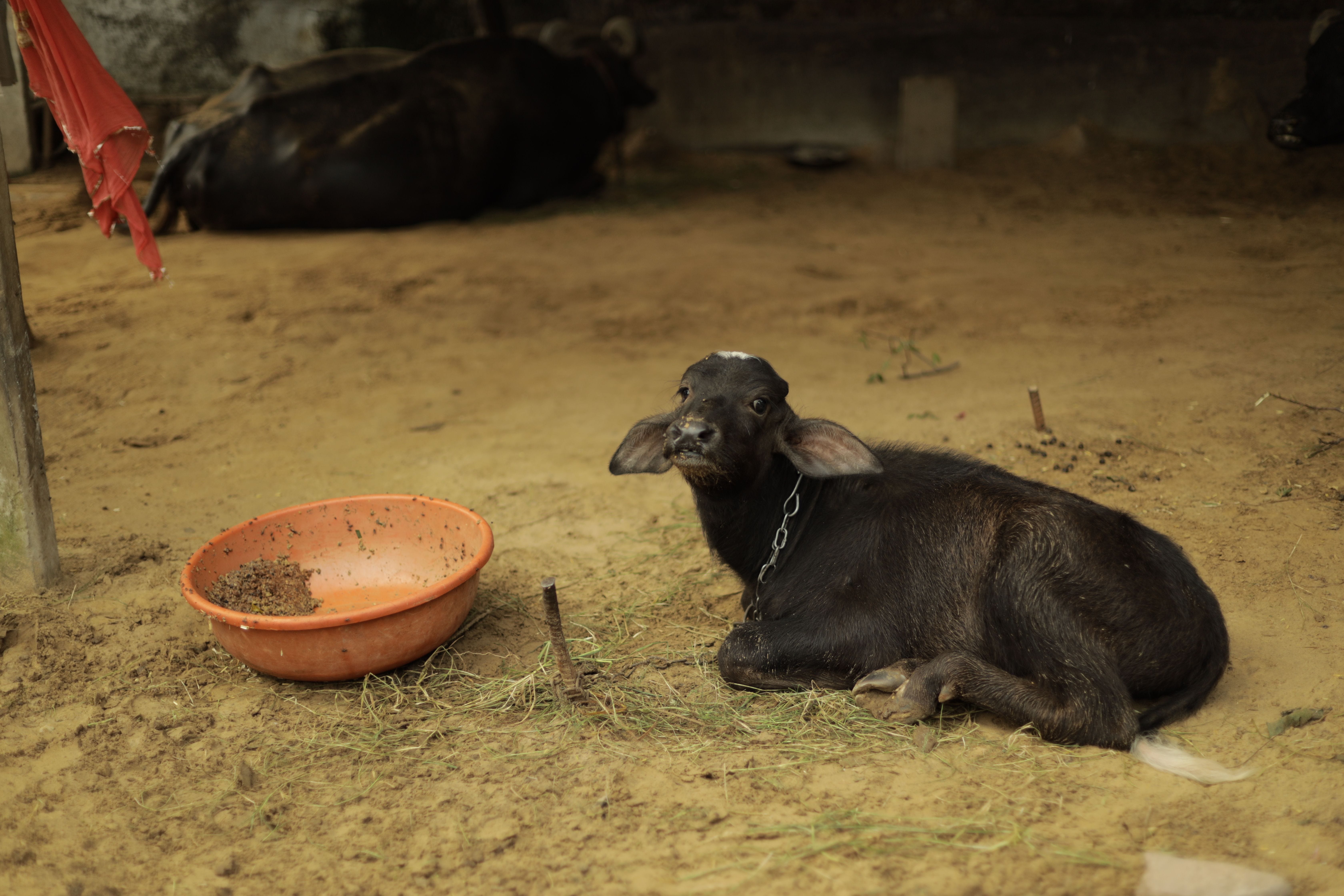
Then there is the quiet mathematics of the male calf. Half of all the babies born to sustain this milk supply are male. A crossbred male calf cannot pull a plough, and he gives no milk. He is a financial liability, treated like a ruined crop after an unseasonal rain, just something to be discarded. Feeding him costs more than his life is worth. So, the system relies on organized extermination through neglect. Around eighty percent of these male dairy calves die prematurely from deliberate starvation and exposure. They are tied to a post away from their mothers and left to slowly collapse over weeks, their stomachs hollowing out until their organs fail.
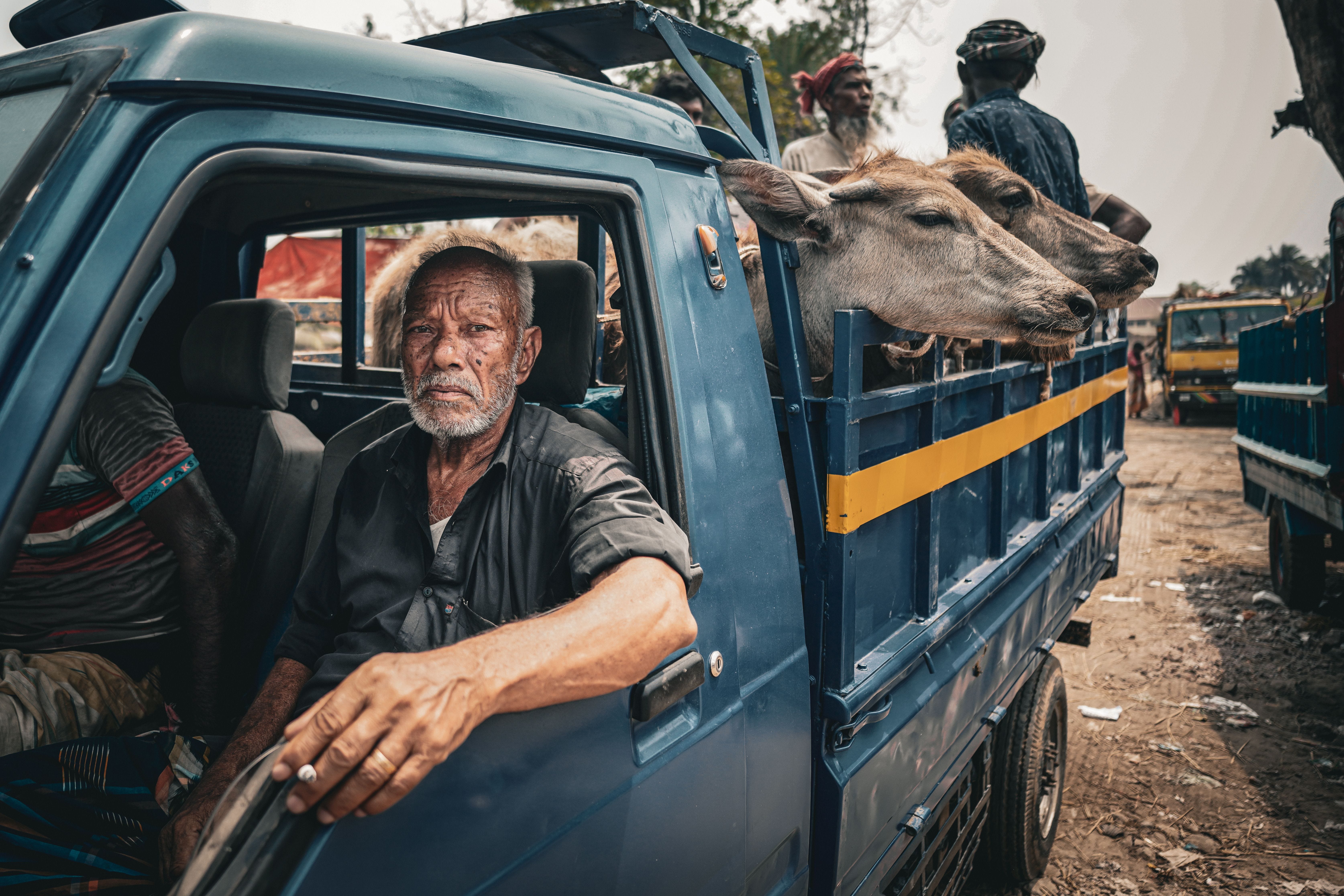
The mother does not fare much better. After five to seven years of forced pregnancies and chronic udder infections, her body simply gives out. The economics of the dairy cooperative would buckle entirely if farmers had to feed these non-productive, spent animals. They must be cleared out. West Bengal is the great corridor for this disposal, serving as the primary geographical conduit for the highly lucrative cattle trafficking trade into Bangladesh. The dairy industry is symbiotically dependent on the beef and leather industries to absorb its depreciated assets. The spent cows are packed into trucks so tightly their bones snap during the journey. Handlers break their tails and rub chili powder into their eyes to force exhausted, lame animals up the loading ramps. When they finally reach the abattoir or cross the border, their throats are slit while they are fully conscious.
We measure progress in tonnes of product and crores of investment. We rarely measure it in minutes of agony. Yet the numbers are exact. Every standard one-kilogram tub of Amul curd from the Sankrail plant carries a precise, hidden cost:
Forty-nine minutes of chronic, hurtful pain from lameness and disease.
Ten minutes of the disabling psychological trauma of a mother losing her child.
Ten minutes of excruciating pain, paid for by the terminal starvation of a male calf or the un-stunned slaughter of the mother.
Imagine for a moment if that 600 crore rupees had built something else.
What if those towering stainless steel vats were engineered to process oats, soybeans, or almonds?
It would have been a monument to actual development. A mega-plant producing a million kilograms of vegan milk and curd would require no artificial insemination. It would require no stuffed skins to trick mourning mothers. There would be no trucks reeking of ammonia and fear creeping toward the border in the dark. It could have been an example to the world, a true revolution that severed the invisible, bleeding artery connecting the local sweet shop to the slaughterhouse.
The spoon cuts through the thick top layer of the mishti doi.
The sugar melts on the tongue, familiar and comforting, just like the stories we tell ourselves about where it comes from.
Image Credits:
Photo by Srijan Kundu, Jubayer Ahmed, Susheel Parihar , Emadul Islam Akash, Pritom Ghosh from Pexels.
Calculations
Disclaimer on Methodology and Estimates
The quantitative estimates presented in this analysis are based on a model-driven approach using frameworks such as the Welfare Footprint methodology and Welfare-Adjusted Life Years (WALY). These frameworks aim to approximate animal welfare impacts by combining available scientific data with standardized assumptions regarding pain intensity, duration, and prevalence.
It is important to note that these figures are not direct measurements but analytical estimates derived from multiple assumptions, including disease prevalence rates, mortality rates, duration of distress, and behavioral responses. Such parameters can vary significantly across regions, farming practices, and individual conditions.
The allocation of total estimated suffering to specific dairy products (e.g., per kilogram of curd) is a simplified normalization technique intended to illustrate scale rather than establish precise causation. As such, the results should be interpreted as indicative and illustrative, not definitive or universally applicable.
This analysis is intended to contribute to ethical and policy discussions by providing a structured way to think about animal welfare impacts at scale. Readers are encouraged to interpret the findings in light of their underlying assumptions and inherent uncertainties.
To understand the true cost of that white plastic tub of curd, we have to look at the arithmetic. It is not complicated. It is just heavy.
A factory cannot function without raw material. The Sankrail plant demands 1.5 million litres of milk every single morning.
Now, look at the supplier. An average local cow in Bengal, her ribs showing like the corrugated ridges on an asbestos sheet over a roadside dhaba, gives about four and a half litres of milk a day.
To find out how many cows are needed to meet the daily quota, you simply divide the total milk required by the milk one cow gives.
1,500,000 litres ÷ 4.5 litres = 333,333 cows.
Three lakh and thirty-three thousand cows. Just standing there, lactating.
But a cow is not a tap. You cannot leave her running all year. She has a natural cycle. After producing milk for about ten months, her body needs a rest before she gives birth again. This cycle takes roughly 446 days.
If the factory machines never stop, the farmers must keep backup animals. For every cow currently giving milk, there must be others in their dry period, waiting to replace her.
To find the real size of the required herd, you multiply the active cows by this biological delay factor.
333,333 cows × 1.496 = 498,666 cows.
Let us call it what it is. Half a million adult cows. A sprawling, invisible city of five lakh animals, permanently tethered to the operations of a single food park in Howrah.
A cow only produces milk if she is kept pregnant. To maintain that massive herd of five lakh cows, births must happen constantly.
You divide the total herd by the calving cycle, then multiply by the days in a year to see how many babies are born. The answer is staggering: 408,105 calves are born annually.
Biology dictates that half of these babies will be male. Two lakh male calves every year. A male crossbred dairy calf cannot pull a plough. He produces no milk. To the baniya keeping the ledger, he is a liability. Feeding him milk replacer costs more than his market value.
So, the system relies on organized neglect. Statistics show that eighty percent of these male calves are simply tied to a post and left to die.
204,052 male calves × 80% mortality rate = 163,241 deaths.
Over one lakh sixty thousand babies, starved to death every twelve months, just so the milk they would have drunk can be diverted to the Sankrail vats.
The mother cow eventually breaks. By her fourth or fifth lactation cycle, her body is depleted. The milk yield drops. She becomes unprofitable. To keep the milk flowing efficiently, twenty percent of the herd is discarded every year.
498,666 cows × 20% = 99,733 spent cows.
Nearly one lakh mothers are declared useless annually. They are sold to aggregators, loaded onto vastly over-capacity trucks and sent toward the Bangladesh border.
This is the exact mathematics of development.
So now to find the invisible cost of one kilogram of curd, we must take the total suffering the factory generates in a year and divide it by the total amount of food it produces.
Here is the bottom of the fraction, the output. The facility is engineered to manufacture 10 lakh kilograms of processed dairy every single day. Multiply that by the days in a year and the plant outputs 365 million kilograms of product annually. This vast sea of white is the denominator.
Now, we calculate the numerator. We count the hours of pain, categorized by their sheer intensity and divide them by those 365 million kilograms.
How does nearly an hour of chronic ache end up in a single tub of curd?
We start with the daily lives of the mothers. In this supply chain, a lakh of cows stand permanently tethered on hard pucca floors, developing joint swelling and lameness that costs them 100 million hours of pain a year. Another lakh suffer from subclinical mastitis, a quiet, low-grade inflammation of the udder that throbs with every milking, adding 200 million hours.
Together, the herd endures 300 million hours of hurtful pain annually. We divide those 300 million hours by the 365 million kilograms of annual curd output. The result is 0.82 hours. Multiply that by sixty and you get roughly 49 minutes. That is 49 minutes of limping, throbbing discomfort poured into the plastic container you are holding.
Then we measure the disabling pain. This is a level of suffering that fundamentally breaks an animal, stopping them from eating or resting. It comes primarily from the psychological shattering of a mother losing her child. The Sankrail herd births over four lakh calves a year. Each time a newborn is dragged away, it induces a severe distress phase of at least 72 hours for both the mother and the baby. Add to this the cows suffering from acute, visible udder infections.
This creates a staggering 60.76 million hours of disabling pain every year. We do the math again. Divide 60.76 million hours by the 365 million kilograms of product. The calculator shows 0.16 hours. That is exactly 10 minutes. Ten minutes of frantic pacing, bellowing, and fever condensed into the one-kilogram tub.
Finally, there is the terminal ledger. Excruciating pain is the absolute limit of biological endurance. Over one lakh sixty thousand male calves are tied up and left to starve because they give no milk and have no economic value. It takes a calf roughly 14 days, or 336 hours, to die of organ failure and extreme hunger. Meanwhile, nearly a lakh of spent, exhausted mothers are packed into overcrowded trucks, driven to the border and slaughtered without stunning, enduring 48 hours of pure terror and physical agony.
This pipeline of deliberate death generates 59.63 million hours of excruciating pain. Divide those 59.63 million hours by the 365 million kilograms of curd. Once more, the math yields 0.16 hours. Another 10 minutes.
When you place that tub of mishti doi on the dining table and peel back the foil lid, the math sits right there in the ceramic bowl. It is not theoretical. It is a very specific debt, paid in blood and breath, subsidized by the quietest corners of the Bengali countryside.
#Amul #AmulIndia #CurdFactory #DahiFactory #LargestCurdPlant #FoodProcessing #DairyIndustry #MilkProcessing #FoodManufacturing #IndiaIndustry #Kolkata #WestBengal #Howrah #Sankrail #KolkataNews #BengalIndustry #EasternIndia #MakeInIndia #InvestInBengal #BreakingNews #TrendingNow #BigNews #FutureOfFood #FoodInnovation #MegaProject #ViralIndia #NewsUpdate #IndiaGrowthStory
Join the conversation